
There's something incredibly comforting about a hearty bowl of Red Wine Beef Stew simmering away on a chilly evening. As the rich aroma of tender beef and aromatic herbs fills my kitchen, I can’t help but feel a warm embrace from the flavors melding together. This stew isn’t just a meal; it’s a ticket to nostalgia, reminding me of gatherings with family and friends, where stories are exchanged over steaming bowls of savory goodness.
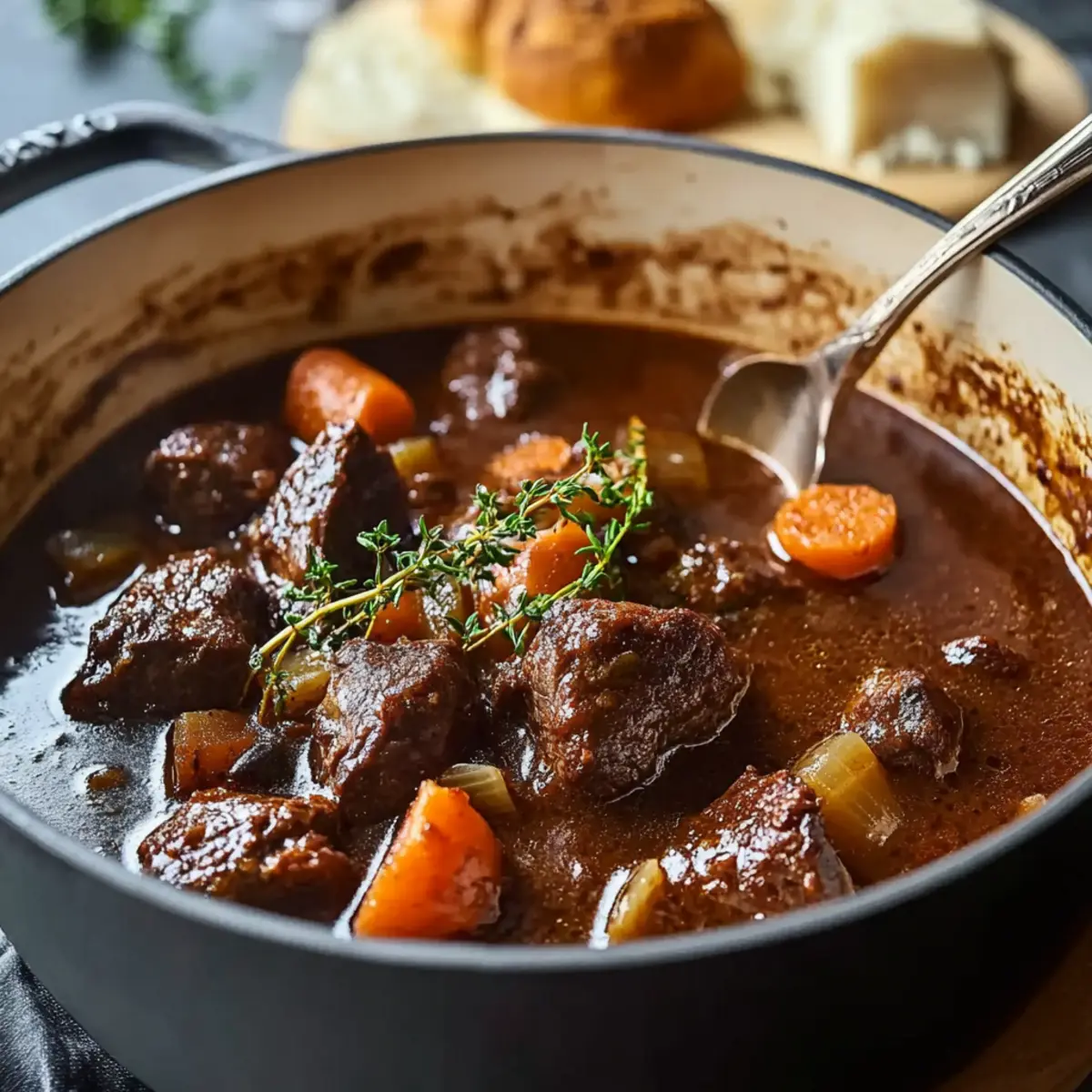
I discovered this delightful recipe during one of those long, lazy Sunday afternoons when I craved something more than the usual fast-food fare. Picture this: a simple combination of chunks of beef, earthy vegetables, and a splash of red wine that transforms humble ingredients into a mouthwatering feast. With just a bit of preparation, you’ll be rewarded with a dish that’s perfect for sharing or savoring solo, warming both your belly and your heart.
Get ready to ditch the drive-thru and embrace this nourishing staple that proves home-cooked meals can be both effortless and exquisite. Let’s dive into creating your new favorite comfort food!
Why You'll Love This Red Wine Beef Stew
- This Red Wine Beef Stew is incredibly easy to make, allowing you to spend more time enjoying a cozy evening and less time in the kitchen.
- The rich flavors of tender beef, aromatic herbs, and earthy vegetables create a dish that is both comforting and delicious.
- Its versatility means you can customize it with your favorite veggies or even serve it over rice or pasta for a delightful twist.
- Plus, the stunning visual appeal of a bubbling pot of stew makes it an impressive dish for dinner parties or family gatherings.
- Nothing beats the satisfying feeling of preparing a hearty meal that will surely please a crowd.
Red Wine Beef Stew Ingredients
For the Beef
• 2 lb beef chuck – cut into chunks for optimal tenderness and flavor.
• 0.25 cup all-purpose flour – helps to brown the beef and thicken the stew.
For the Stew Base
• 3 tablespoon olive oil – adds richness and helps in browning the beef.
• 1 cup onion – chopped to develop a savory foundation for the stew.
• 3 cloves garlic – minced to infuse the dish with aromatic depth.
• 2 tablespoon tomato paste – provides a concentrated flavor that enhances the stew.
For the Vegetables
• 4 carrots – sliced for a sweet, earthy contrast to the beef.
• 4 potatoes – cubed to soak up the rich broth while adding heartiness.
For the Liquid and Seasoning
• 1.5 cups red wine – a key ingredient that enriches the stew with depth and complexity.
• 3.5 cups beef broth – adds moisture and reinforces the beefy flavor profile.
• 2 bay leaves – for a subtle layer of herbal aroma.
• 1 teaspoon dried thyme – complements the vegetables and elevates the stew's flavor.
• 1.5 teaspoon salt – to season and bring out the flavors of all the ingredients.
• 0.75 teaspoon black pepper – adds a gentle warmth to the overall dish.

How to Make Red Wine Beef Stew
-
Season and Flour: Begin by seasoning your 2 lbs of beef chuck with salt and pepper, then toss it in 0.25 cup of all-purpose flour. This step is crucial for adding flavor and helping to create a nice crust when browning.
-
Brown the Beef: In a large pot, heat 3 tablespoon of olive oil over medium-high heat. Brown the beef in batches, ensuring each piece is perfectly seared on all sides. Remove the beef and set it aside afterward to keep it juicy.
-
Sauté Aromatics: In the same pot, add 1 cup of chopped onion and 3 minced cloves of garlic. Sauté them for about 3-4 minutes until they’re soft and fragrant, as this will form the base of your stew.
-
Add Tomato Paste: Stir in 2 tablespoon of tomato paste and let it cook for about a minute. This step intensifies the flavors and adds a wonderful depth to your stew.
-
Deglaze the Pot: Pour in 1.5 cups of red wine, scraping up the browned bits at the bottom of the pot. Simmer for about 2-3 minutes until the wine reduces slightly, which will deepen the flavor of your stew.
-
Combine Ingredients: Return the browned beef to the pot, then add in 3.5 cups of beef broth, 2 bay leaves, and 1 teaspoon of dried thyme. This mixture will be the heart of your stew, so stir it gently to combine.
-
Simmer Gently: Cover the pot, lower the heat, and let it simmer for 90 minutes. This slow cook allows the beef to become tender and meld the beautiful flavors throughout.
-
Add Vegetables: After simmering, add 4 sliced carrots and 4 cubed potatoes to the pot. Cover and let it simmer for an additional 30 minutes, or until the vegetables are tender.
-
Finish & Serve: Remove the bay leaves, adjust the seasoning with more salt or pepper if needed, and serve your hearty Red Wine Beef Stew warm. Enjoy the comforting aromas!
Optional: Garnish with fresh parsley for a pop of color and freshness.
Exact quantities are listed in the recipe card below.
How to Store and Freeze Red Wine Beef Stew
Fridge: Store the Red Wine Beef Stew in an airtight container for up to 3 days. Allow it to cool completely before sealing to prevent condensation and spoilage.
Freezer: For long-term storage, freeze the stew in portion-sized containers or freezer bags for up to 3 months. Make sure to leave some space for expansion as the liquid freezes.
Reheating: When ready to enjoy, thaw the stew in the fridge overnight, then reheat on the stove over medium heat until it's warmed through. Stir occasionally for even heating.
Serving Suggestions: Once reheated, serve over fresh bread or fluffy mashed potatoes for a hearty meal, reminding you of those cozy evenings together.
Make Ahead Options
Preparing your Red Wine Beef Stew in advance is a fantastic way to save time on busy weeknights! You can season and flour the beef (up to 24 hours in advance), keeping it covered in the refrigerator to maintain quality. Additionally, chop the onions, garlic, carrots, and potatoes ahead of time; store these in airtight containers for up to 3 days. When you're ready to cook, brown the meat and follow the recipe as instructed, adding the prepped vegetables right before the final simmer. This ensures that your stew retains its delicious flavor and heartiness, making your meal as comforting and delightful as if you had just prepared it.
Red Wine Beef Stew Variations
Feel free to make this dish your own with delicious twists that excite your palate.
-
Dairy-Free: Swap traditional flour for a gluten-free alternative like cornstarch to thicken without dairy.
-
Vegetarian: Use mushrooms and lentils instead of beef for a hearty, plant-based version packed with flavor. The umami richness from mushrooms beautifully replaces the beef.
-
Spicy Kick: Add a teaspoon of red pepper flakes for a warm, spicy depth that enhances the savory elements of the stew.
-
Herb Twist: Experiment with fresh herbs like rosemary or parsley instead of dried thyme for a fresher, vibrant taste. Fresh herbs bring an aromatic lift that brightens the dish.
-
Vegan: Replace beef broth with vegetable broth and omit the beef. Enhance the vegetable medley for a wholesome, vegan delight that still warms the soul.
-
Wine Substitution: If you don't have red wine, try using a mix of balsamic vinegar and grape juice for a similar sweet and tangy richness.
-
Root Veggie Boost: Add parsnips or turnips for an extra layer of sweetness and a creative twist on your veggie mix, enhancing both flavor and texture.
-
Slow Cooker Option: For a set-it-and-forget-it approach, combine all ingredients in a slow cooker and let it simmer on low for 8 hours. The result? Melt-in-your-mouth meat and a thick, flavorful stew.
What to Serve with Red Wine Beef Stew?
Nothing warms the heart quite like a hearty stew filled with rich flavors and tender ingredients, perfect for cozy evenings.
-
Crusty Bread: Ideal for soaking up the flavorful broth, crusty bread brings a delightful contrast in texture and enhances the meal.
-
Garlic Mashed Potatoes: Creamy and buttery, these mashed potatoes add a comforting side that complements the rich stew beautifully. Picture them absorbing every drop of sauce—pure bliss!
-
Steamed Green Beans: Fresh and crisp, green beans add a pop of color and bright flavor. Their slight crunch serves as a great contrast to the tender beef and vegetables.
-
Side Salad: A light, mixed greens salad with a tangy vinaigrette cuts through the richness of the stew, balancing the meal perfectly.
-
Roasted Brussels Sprouts: Slightly caramelized and nutty, these sprouts add depth and a hearty element that pairs beautifully with the beef.
-
Crisp Red Wine: An additional glass of the same red wine used in the stew will elevate the flavors and enhance the dining experience.
-
Dark Chocolate Mousse: To finish on a sweet note, this rich dessert complements the deep flavors of the stew, ensuring your meal ends on a high note.
These pairings will turn your Red Wine Beef Stew into a memorable feast, making every bite an experience to savor!
Chef's Helpful Tips
- For the best results with your Red Wine Beef Stew, make sure to brown the meat in batches to avoid steaming, which can prevent that desirable crust from forming.
- When deglazing the pot with red wine, take the time to scrape all the browned bits from the bottom as they are packed with flavor that enhances your stew.
- To ensure even cooking, cut your vegetables into uniform sizes, so they all become tender at the same time.
- Remember to check the seasoning towards the end of cooking; sometimes a pinch more salt can bring out the stew's flavors beautifully.
Red Wine Beef Stew Recipe FAQs
What type of beef is best for Red Wine Beef Stew?
Absolutely! For the best flavor and tenderness, I recommend using beef chuck. This cut is well-marbled, which allows it to break down beautifully during the long cooking process, resulting in a melt-in-your-mouth texture. You can also use brisket or round if you prefer, but beef chuck is my go-to for stews.
How should I store leftovers of Red Wine Beef Stew?
Store your leftover Red Wine Beef Stew in an airtight container in the fridge for up to 3 days. Make sure to let it cool to room temperature before sealing it up. When you're ready to enjoy it again, simply reheat it gently on the stove or in the microwave—just like a warm hug!
Can I freeze Red Wine Beef Stew?
Yes, indeed! You can freeze Red Wine Beef Stew for up to 3 months. To do this, cool the stew completely first, then portion it into airtight containers, leaving some space at the top to allow for expansion. When you're ready to eat, just thaw it in the fridge overnight and reheat it slowly on the stovetop.
What if my stew is too thin or watery?
If your stew is looking a bit thin, no worries! Simply mix a tablespoon of all-purpose flour or cornstarch with a small amount of cold beef broth to create a slurry. Stir this mixture into the simmering stew and let it cook for about 5-10 minutes until it thickens up. A great trick to ensure it's just the right consistency!
Are there any dietary considerations for Red Wine Beef Stew?
Very! This stew contains red wine, so it's important to remember that it may not be suitable for everyone, particularly individuals avoiding alcohol. For an alcohol-free version, you can substitute the red wine with additional beef broth or a mixture of grape juice and vinegar for a similar depth of flavor. And don’t forget to ensure all your ingredients are free from allergens if needed!
Red Wine Beef Stew
Ingredients
Equipment
Method
- Season and flour the beef. Coat the beef chunks evenly with salt and pepper, then dust them gently with flour.
- Brown the beef in oil. In a large pot, heat the olive oil over medium-high heat and cook the beef in batches until golden brown.
- Sauté onions and garlic. In the same pot, add chopped onions and minced garlic, and sauté for about 3-5 minutes until translucent.
- Stir in tomato paste and cook briefly. Add the tomato paste, stir for 1-2 minutes to enhance its flavor.
- Deglaze with red wine. Pour in the red wine, scraping the bottom of the pot and simmer for 3-5 minutes.
- Return beef and add broth. Place the browned beef back in the pot, pour in the broth, bay leaves, and thyme, and stir.
- Cover and simmer for 90 minutes. Reduce heat and let the stew simmer gently.
- Add carrots and potatoes. Stir in sliced carrots and cubed potatoes, cover, and simmer for an additional 30 minutes.
- Remove bay leaves and adjust seasoning. Take out bay leaves, taste, and adjust seasoning with salt and pepper.




Leave a Reply